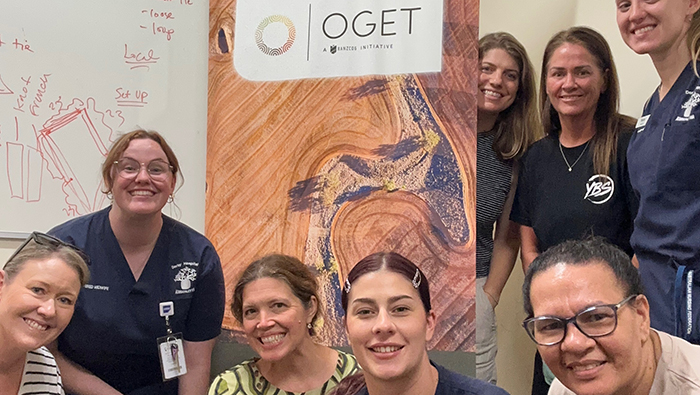
The Warrnambool Obstetrics and Gynaecology Education and Training (OGET) hub recently hosted an obstetric anal sphincter injury (OASI) training workshop benefiting from the use of simulation equipment in Camperdown, Victoria. The session highlighted important, targeted skills training for improving outcomes for mothers in rural and regional areas.
OASI injuries are complex tears that can occur during childbirth. When recognised early and repaired correctly, long-term complications such as chronic pain, incontinence and psychological distress can often be prevented. For women giving birth in rural settings where immediate access to specialist obstetric services may be limited. This makes structured training essential for obstetricians, midwives, rural general practitioners and trainees alike.
The training combined evidence-based education with hands-on simulation using realistic perineal and sphincter repair models. These simulators allowed practitioners to practise identifying injuries and performing repairs in a safe, controlled environment.
Under the guidance of experienced facilitators, participants worked through step-by-step repair strategies, received real-time feedback and refined skills. Beyond the technical work, the training emphasised team communication and patient safety, helping translate simulated practice into better care in real clinical environments. For practitioners working in rural or regional settings, exposure to severe perineal trauma may be infrequent, simulation-based education is especially beneficial in bridging experience gaps and maintaining competence.
By refining technical skills and reinforcing best-practice approaches, the workshop directly supports better outcomes for rural mothers. Improved clinician confidence and competence reduce the need for transfers to tertiary centres, allowing women to receive high-quality care closer to home, surrounded by their families and support networks.
Importantly, the training also emphasised communication, consent and post-birth follow-up so patients feel informed, supported and safe during what can be a physically and emotionally challenging experience.
Overall, the OGET OASI simulation training in Camperdown represents a meaningful investment in rural maternity care. By equipping clinicians with advanced skills and confidence, this education supports women in rural communities to receive safer births, timely treatment, and better long-term health outcomes closer to home.